





By Dr. Jordi Smith, Pediatric Naturopathic Doctor
If you’ve ever searched for “non-toxic baby gear,” you’ve probably seen the term PFAS-free pop up—and for good reason. In my work as a pediatric naturopathic doctor (and after supporting hundreds of families), I’ve noticed something consistent: parents are willing to research everything that goes into their baby’s body… but we don’t always talk enough about what surrounds their body all day long—like textiles, coatings, and “performance” treatments on everyday gear.
One of the biggest categories I encourage families to pay attention to is PFAS.
What are PFAS?
PFAS stands for per- and polyfluoroalkyl substances—a large group of human-made chemicals known for being highly persistent (they break down very slowly, which is why they’re often called “forever chemicals”).
They’ve been used for decades because they’re great at making materials water-resistant, stain-resistant, and grease-resistant—aka the exact qualities that get marketed to busy parents.
Where are PFAS typically found?
PFAS can show up in more places than most people realize. Common sources include:
- Water- and stain-repellent textiles (outerwear, some upholstered fabrics, carpets, and baby products like strollers)
- Grease-resistant food packaging (some wrappers, boxes, and other packaging)
- Nonstick cookware (certain types and coatings)
Certain cosmetics/personal care items (some products may still contain PFAS)
And while exposures vary, PFAS are notable because they can build up in the body over time with repeated exposures.
Why I care about PFAS in baby gear specifically
Babies and toddlers are close-contact humans:
- Cheeks on fabric
- Sticky fingers on everything
- Mouthing straps, buckles, and edges (because… of course)
So when a product’s fabric has been treated to repel water/stains, my “nontoxic product” radar goes up. I’m not here to make parents afraid—I’m here to make the “healthier choice” easier to identify.
How to avoid PFAS (practical, real-life tips)
Here’s what I recommend to families who want to reduce PFAS exposure without turning life into a full-time research project:
1) Look for explicit PFAS-free claims (not vague “eco” language)
Marketing terms can be fuzzy. Helpful phrases include:
- “PFAS-free”
- “fluorine-free”
- “No PFCs”
- “C0 DWR” (a type of durable water repellent finish designed to be PFAS-free)
2) Be cautious with anything marketed as “stain-proof,” “waterproof,” or “easy-clean” fabric
Those features often come from chemical treatments. If you want the performance benefit, choose brands that clearly state they’ve achieved it without PFAS.
3) Reduce PFAS from the kitchen (high-impact for many families)
- Consider swapping heavily worn nonstick cookware for alternatives you like using (stainless, cast iron, etc.).
- Limit reliance on grease-resistant food packaging when you can (even small shifts help).
4) Don’t underestimate dust + textiles
PFAS exposure can also happen through household dust and residue from treated consumer products (like stain-resistant carpet or water-repellent fabrics).
Simple “good enough” moves: wet-dusting, HEPA vacuuming if you have it, washing hands before meals.
The Bumbleride piece: PFAS-free strollers (yes, it matters)
This is one reason I appreciate when baby brands make their materials list easy to understand.
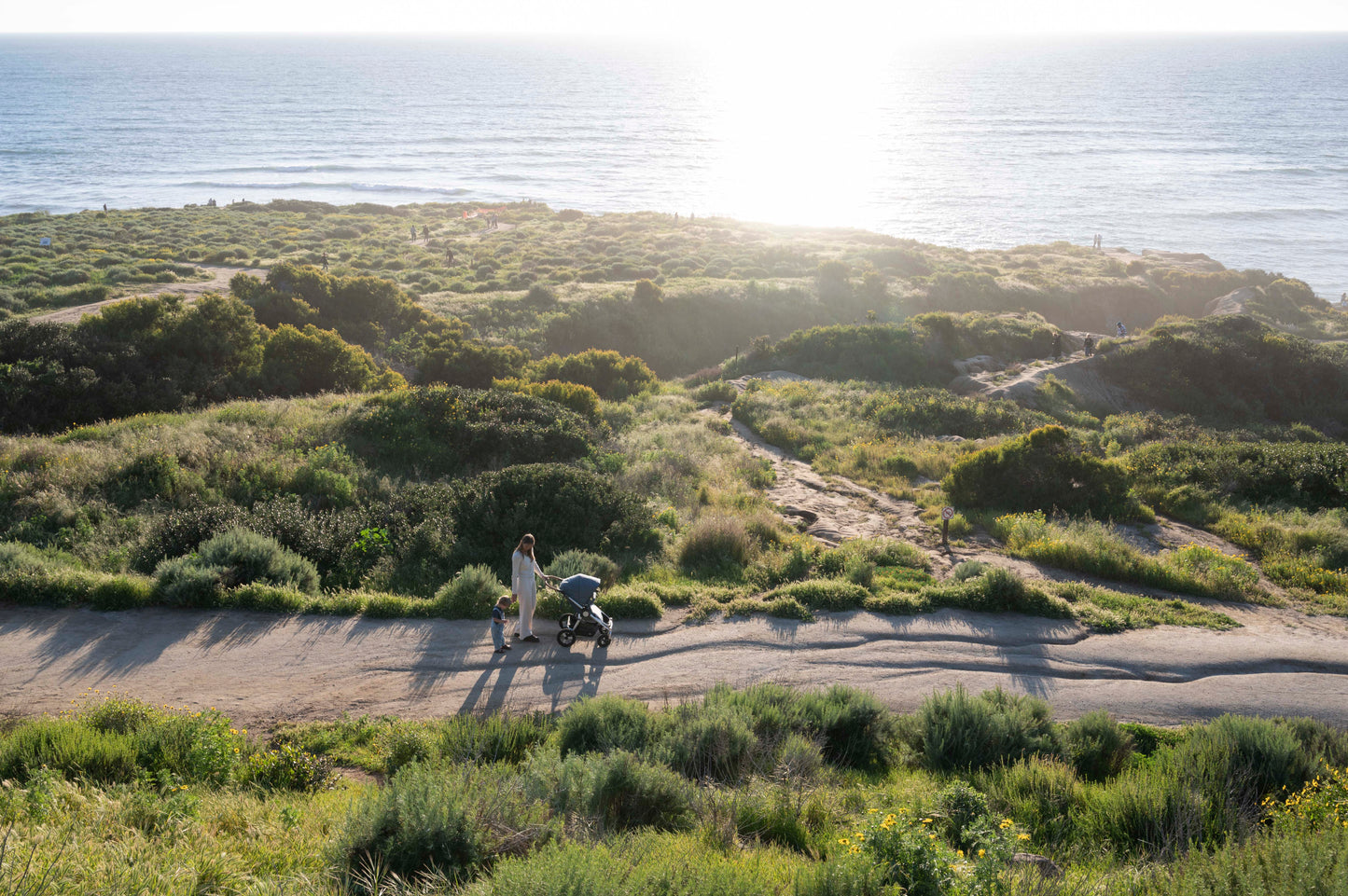
Bumbleride’s strollers use their PFAS-free (C-0) durable water repellent on fabrics (introduced with their 2020 collection).
You’ll also see “free from PFAS” listed directly in the product “health checklist” on their stroller pages.
From a busy parent perspective, this is huge: you get the everyday usability benefits (like fabric performance and durability) without leaning on PFAS chemistry to get there.
My bottom line for parents
If you’re already thinking about cleaner food and cleaner air, PFAS-free is the next logical step—especially for the high-touch items your baby spends hours in.
When you’re choosing a stroller (or any baby gear), my quick checklist is:
- Does the brand clearly state PFAS-free?
- Do they explain their material choices (not just buzzwords)?
Is the product designed for long-term use so you’re not replacing it constantly?
That’s why PFAS-free strollers—like Bumbleride—stand out in a category where “performance fabric” too often comes with chemical tradeoffs.
 United States
 Canada
 Australia
 Austria
 Denmark
 Estonia
 Finland
 Germany
 Latvia
 Lithuania
 Poland
 Russia
 Sweden
 Switzerland
 United Kingdom
 The Czech Republic
 The Slovak Republic